
AI in Healthcare: Improving Compliance and Patient Care
- Home
- Healthcare Compliance Software
- AI in Healthcare: Improving Compliance and Patient Care

AI is revolutionizing the field of healthcare by changing how hospitals manage their routine clinical and administrative tasks. According to the September 2025 report by HealthIT.gov (ASTP Data Brief No. 80), 71% of U.S. hospitals used predictive AI integrated into their EHR systems in 2024, up from 66% in 2023, which showcases the rapid growth and utility of AI in enhancing patient care and operational efficiency.
The most prominent issue in the implementation of AI in the healthcare industry is the protection of patient information and compliance with regulatory frameworks (e.g., HIPAA and GDPR). There are also questions of ethics which are associated with the use of AI in breach of direct patient care, and for this reason, it is extremely vital for healthcare professionals to exercise care in these situations.
Companies like ComplyAssistant help healthcare systems stay within the bounds of the law and use AI to be more efficient. With an understanding of the advantages and disadvantages of using artificial intelligence, healthcare professionals can thrive in the multifaceted environment of the changing times.
Introduction to AI in Healthcare
AI in healthcare is not a trend. It is changing patient care, diagnosis, and management of the entire healthcare system. Numerous studies and examples demonstrate the significant improvements in healthcare resulting from AI analyzing data for better insights and recommendations.
What AI can accomplish in healthcare?
There are a number of ways AI can be of service in the healthcare industry:
- Helping Doctors Make Decisions: AI helps physicians make more informed choices by reviewing prior patient documentation. For instance, AI can scan countless patient records to identify potential patterns and health risks. This will help the doctors formulate the appropriate treatment protocols.
- Predicting Health Risks: AI can help the healthcare system by analyzing present and past data to predict potential medical problems. For example, healthcare facilities can use AI to prevent readmission by identifying patients at risk.
- Office Tasks Automation: AI can help streamline processes by taking over repetitive and monotonous tasks. Healthcare systems require a tremendous amount of documentation, and AI can manage patient records, schedule appointments, and perform billing tasks.
- Customizing Treatments for Each Patient: AI creates personalized treatment plans by assessing an individual’s medical history, genetics, and other biological factors. This helps patients feel more personally invested in the care process.
Ready to Simplify HIPAA Compliance?
Importance of ComplyAssistant’s Solutions
Despite the promising opportunities for using AI in healthcare, there are considerable compliance issues for organizations to face. The use of ComplyAssistant’s tools and artificial intelligence, can help healthcare organizations deal with these complexities properly.
If compliant with federal regulations, healthcare organizations can make the most out of the revolutionary potential of artificial intelligence.
What Does AI in Healthcare Really Mean?
AI in healthcare is changing the operational dynamics of systems. Imitating human intelligence, AI can assist with tasks such as diagnosing medical conditions, managing day-to-day operations, and analyzing data. With the assistance of AI, doctors can make decisions faster and with more accuracy, and administrative staff have their workloads lightened.
Understanding AI in the Healthcare World
Artificial Intelligence in healthcare refers to the use of algorithms and software to perform tasks that typically require human intelligence. This includes both diagnostic and administrative functions. By using large amounts of data, AI helps clinicians and administrators improve both the efficiency and accuracy of healthcare delivery.
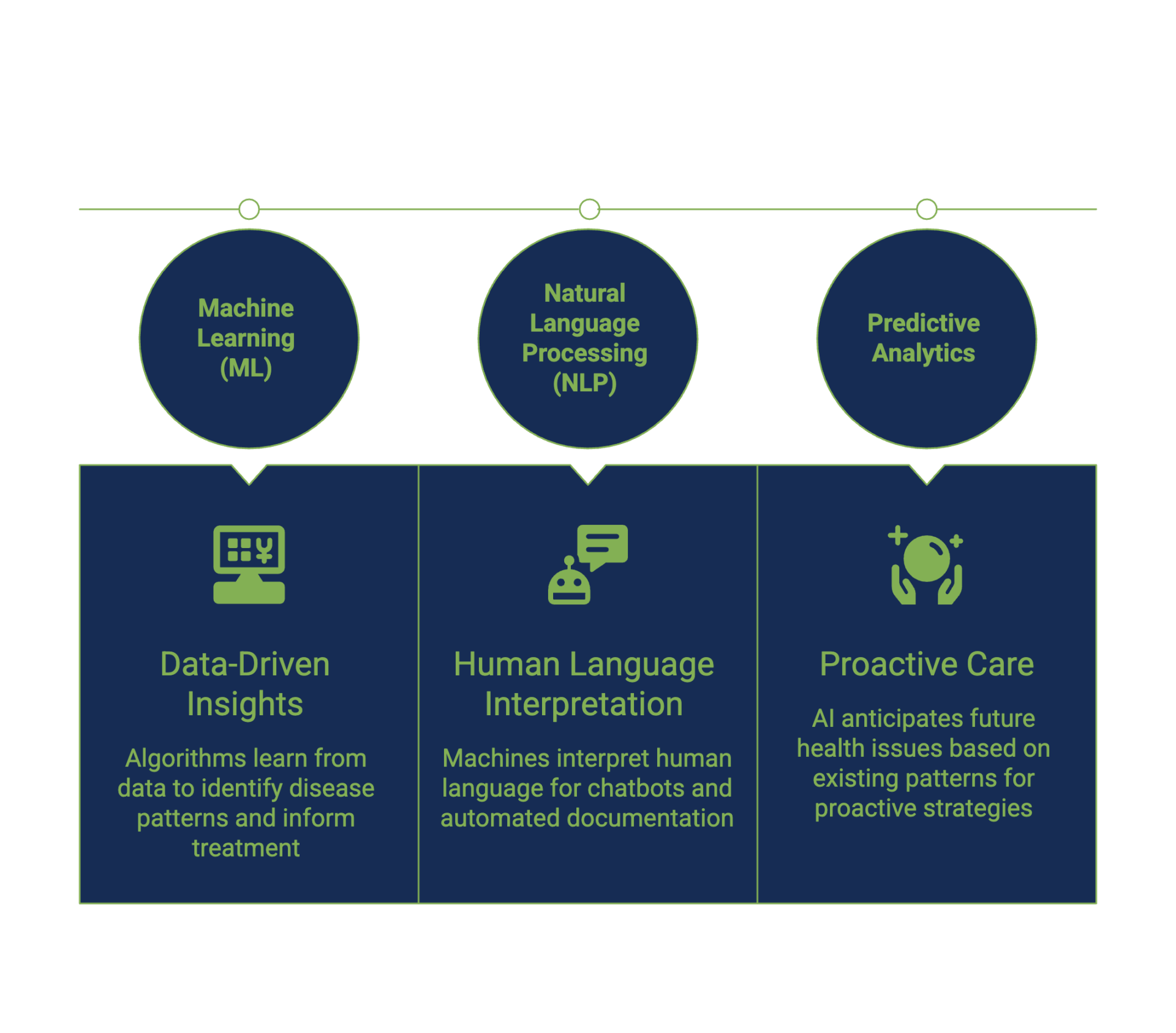
Key Technologies in AI:
- Machine Learning (ML): This approach uses algorithms that allow systems to learn from data, thus improving predictions and decisions. In healthcare, ML applications can analyze complex datasets to identify disease patterns and inform treatment decisions.
- Natural Language Processing (NLP): NLP enables machines to interpret human language, facilitating applications such as chatbots for patient inquiries and automated documentation for clinical records.
- Predictive Analytics: Using AI for predictive analytics can help healthcare organizations anticipate future health issues based on existing patterns, enabling proactive care strategies.
In simple terms, AI acts as an advanced tool that streamlines healthcare processes, reduces manual work, and ultimately enriches patient care and organizational operations.
From Concept to Practice: How AI in Healthcare Has Evolved
AI in healthcare has come a long way, starting with basic systems that followed set rules, to using advanced technology that learns from data. Over the years, there have been key moments that show how AI is becoming a bigger part of healthcare.
This history shows how much AI has advanced in healthcare and its potential to improve patient care and administrative tasks in the future.
The Real Benefits of AI for Healthcare Compliance
Navigating healthcare compliance can be complex, with the constant need to stay updated on changing regulations. AI-driven solutions simplify this process, offering a range of benefits that help healthcare organizations stay compliant more efficiently.
One of the key advantages is AI’s ability to improve regulatory compliance accuracy, ensuring tasks like reporting and monitoring are done with precision and less human error. AI tools not only streamline the process but also help reduce the risks associated with non-compliance.
Improving Data Privacy and Protection with AI
Patient data privacy is more important than ever in today’s digital age, where breaches can cause serious harm to both patients and healthcare organizations. AI technologies provide new ways to improve data privacy and security, helping protect sensitive information.
Key functions of AI in data protection include:
- Data Encryption and Secure Storage: AI algorithms can automatically encrypt patient data, making access much more difficult for unauthorized users. This capability helps healthcare organizations comply with regulations such as HIPAA.
- Anonymization Techniques: AI tools enable the anonymization of patient data for research and analysis without compromising individual privacy. For example, AI can strip personally identifiable information from datasets while allowing researchers to draw valuable insights from aggregated data.
- Alert Systems for Breaches: AI technologies can offer real-time alerts regarding suspected data breaches, allowing organizations to respond promptly to potential threats.
Implementing AI solutions ensures that sensitive health information is better protected against unauthorized access, enhancing compliance with essential regulations.
AI-Enhanced Reporting and Documentation Automation
Healthcare organizations handle immense volumes of documentation, which often leads to inefficiencies and errors. AI simplifies reporting processes by making them faster and more reliable.
The adoption of AI technologies can lead to:
- Automated Documentation: Many organizations benefit from AI-driven tools that automatically create and update compliance documents. This helps to dramatically reduce the administrative burden. For example, ComplyAssistant’s software can generate real-time compliance reports, allowing healthcare providers to remain proactive about their regulatory obligations.
- Streamlined Electronic Health Records (EHR): AI can maximize the effectiveness of EHR systems through intelligent data input processes, reducing the chance for human error during documentation. This ensures that patient records are always accurate and up-to-date.
- Enhanced Data Retrieval: AI technologies assist in managing large amounts of patient information efficiently. Healthcare providers can benefit from tools that allow rapid access to relevant clinical documentation, thus improving decision-making processes.
By using AI to automate these critical tasks, healthcare organizations can enhance documentation accuracy and improve compliance, leading to higher-quality patient care.
Strengthening Early Fraud Detection Through AI
The financial implications of healthcare fraud are significant, costing organizations millions each year. AI technologies are invaluable resources for early detection of fraudulent billing practices, thus protecting organizations from massive losses.
Key benefits include:
- Anomaly Detection: AI algorithms can examine billing patterns and service records in real-time, identifying any inconsistencies or unusual activity that could signal fraud. For instance, hospitals using AI tools have reported a 40% improvement in detecting fraudulent claims earlier than before.
- Improving Cost Efficiency: Detecting fraud early saves money and boosts the reputation of healthcare organizations. Strong fraud prevention helps maintain patient trust and ensures resources are used for those who truly need them.
- Improving Compliance: By implementing AI systems for fraud detection, healthcare organizations can maintain compliance with federal regulations, reducing the likelihood of legal penalties for fraudulent practices.
How AI Is Changing the Way We Handle Clinical and Administrative Tasks
AI is transforming both clinical and administrative tasks, helping healthcare professionals deliver better care and streamline operations. One key area is clinical decision-making, where tools like Clinical Decision Support Systems (CDSS) provide evidence-based recommendations, improve diagnostic accuracy, and personalize patient care. These systems use large amounts of patient data to help healthcare providers make more informed and timely decisions.
AI in Clinical Decision Support Systems (CDSS)
Clinical Decision Support Systems (CDSS) are important tools that use AI to help healthcare providers make better decisions. These systems can improve patient outcomes by offering recommendations based on real evidence, especially in complicated cases.
Here are some key features of AI-powered CDSS:
- Data Integration: AI collects and looks at data from many sources, like electronic health records, lab results, and medical images. This gives doctors a complete picture to help them make better decisions.
- Real-Time Recommendations: AI keeps up with the latest medical research, so it can suggest the newest treatment guidelines during doctor visits. For example, it might recommend the best medicine based on the patient’s condition and history.
- Personalized Treatment Plans: AI helps create treatment plans that are specific to each patient. It considers factors such as a patient’s genetic information, past treatments, and lifestyle to recommend the best care. This makes the treatment more effective and personal.
AI for Operational and Administrative Efficiency
In an era where operational efficiency is crucial for healthcare organizations, AI significantly enhances administrative processes. By automating routine tasks, AI frees healthcare staff to concentrate on patient care, thus improving overall service delivery.
Areas of improvement include:
- Optimized Patient Scheduling: AI systems use predictive analytics to optimize appointment scheduling. This leads to shorter wait times and improved patient satisfaction. Organizations using AI tools can handle scheduling conflicts better and predict when patients might miss their appointments.
- Revenue Cycle Management: Automating the billing process helps reduce errors and speeds up collections. For example, AI can compare claims with coverage rules and highlight any issues that could cause denials.
- Efficient EHR Management: AI tools can streamline the updating and management of electronic health records, significantly reducing the burden on administrative staff. For example, using automated onboarding systems can ensure that new patient records are established efficiently.
By improving operational and administrative efficiencies, AI technologies not only save time but also improve compliance by reducing errors associated with manual processes.
Using AI to Close Healthcare Access Gaps
AI has a huge potential to improve healthcare in areas where it’s harder for people to get care. This technology can help remove obstacles and improve overall health for people who don’t always have easy access to healthcare services. Here’s how AI is making a difference:
- Telehealth Solutions: AI-powered telemedicine platforms let patients get healthcare services remotely. For example, people in rural areas can have video consultations with doctors and get expert advice without having to travel long distances to a healthcare facility.
- Remote Monitoring Systems: AI tools help doctors keep track of patients’ health using wearable devices. For instance, a smartwatch can monitor heart rate and alert doctors if something seems wrong, so they can step in quickly if needed.
- Personalized Patient Education: AI systems can provide health advice specific to each patient, helping them understand healthy habits, take medications properly, and manage their care. This helps patients take a more active role in their own health.
These advances show how AI can overcome the barriers that often prevent people from accessing the healthcare they need, thereby improving the overall quality of care for underserved communities.
Navigating the Complexities of AI and Healthcare Regulations
As AI technologies become more common in healthcare, organizations must understand the rules to ensure compliance and protect patient safety. They need to follow regulations like HIPAA, FDA guidelines, and the GDPR to protect data, ensure security, and safely use AI systems. These regulations help healthcare providers build trust, maintain transparency, and fully use the power of AI.
The Current Rules for AI in Healthcare
Understanding the rules for AI in healthcare is essential for staying compliant and properly managing systems. Several frameworks help guide the use of AI technologies to protect patient safety and ensure data privacy.
Key regulations include:
- HIPAA: This law sets national standards for the protection of patient health information. Organizations must implement safeguards to ensure data privacy and security during AI deployment.
- FDA Guidelines: The FDA oversees medical devices that use AI technologies to make sure they are safe and work properly. For example, AI systems used in diagnostic imaging must go through thorough testing before they can be approved for use.
- GDPR: The European Union’s General Data Protection Regulation is another critical framework that governs how patient data is handled, particularly relevant for healthcare organizations operating across borders.
Healthcare organizations must continuously adapt to these regulatory requirements to fully use AI technologies while mitigating risks associated with non-compliance.
AI Governance Challenges – Oversight, Standards & Patient Safety
As AI technologies become more integrated into healthcare, organizations face governance challenges that require strong oversight. They must ensure compliance and patient safety while effectively managing the risks involved.
Key AI governance challenges include:
- Algorithm Transparency: AI systems must be clear and understandable for both healthcare providers and patients. Setting transparency standards helps build trust, allowing users to understand and verify AI recommendations.
- Ongoing Oversight: Healthcare organizations need to create systems for regularly checking and updating AI tools to make sure they meet changing rules and run efficiently.
- Patient Safety: Patient safety should always come first in AI development and use. Creating protocols to identify and reduce risks ensures that patient well-being stays a priority.
Emerging Global Regulatory Frameworks Impacting AI in Healthcare
The global use of AI in healthcare has led to the creation of new international regulations. Countries are setting up guidelines to ensure AI systems are used ethically, focusing on patient safety and compliance.
Some key frameworks include:
- The EU AI Act: This proposed regulation aims to set clear standards for AI development and use, with a focus on reducing risks and improving transparency in healthcare applications.
- International Harmonization: As AI is used worldwide, countries are working together to establish common regulatory standards. This cooperation helps improve compatibility and ensures guidelines are followed across borders.
- NIST AI RMF 1.0: The NIST AI Risk Management Framework (RMF 1.0) offers a comprehensive approach for organizations to assess and manage AI-related risks. This framework is especially crucial for healthcare organizations in regions like the UAE, where emerging regulations emphasize both ethical use and operational efficiency in AI systems.
Healthcare organizations need to stay updated on these global regulations to remain compliant while using technology to improve patient care.
Legal Accountability & Liability in AI-Assisted Decisions
As AI systems become more prevalent in healthcare decision-making, understanding the legal implications of their use is vital. Legal accountability remains a complex issue as organizations navigate the shared responsibility for outcomes influenced by AI technologies.
Factors to consider include:
- Shared Liability: Determining who is responsible when AI recommends incorrect treatments or diagnoses can be complicated. This shared liability often involves both healthcare providers and AI developers, making accountability a pressing concern.
- Regulatory Compliance: Ensuring that patients are informed about how AI is incorporated into their treatment plans is essential for maintaining ethical standards and patient trust. Clear communications regarding the use of AI can facilitate informed consent.
- Informed Consent Processes: Transparent consent processes build trust and ensure patients understand the extent of AI’s involvement in their care decisions.
By establishing legal frameworks that address accountability, healthcare organizations can better understand the ethical considerations of AI integration and foster greater trust among their patients.
Addressing the Ethical Challenges of AI in Healthcare
It’s important to address the ethical challenges of AI. One big issue is algorithmic bias, which can cause unfair care and increase health gaps. To ensure AI helps everyone, healthcare organizations must create fair, unbiased models for all populations. By tackling these problems, AI can improve healthcare equity rather than deepen divides.
Addressing Bias and Ensuring Fairness in AI Models
One big challenge in healthcare is bias in technology. When these systems are trained on biased data, they can continue to perpetuate existing inequalities in care, causing unfair health outcomes for certain groups.
To fight bias in these systems, organizations should:
- Use Diverse Data: Collecting data that represents all types of people ensures the system doesn’t favor one group. Including different patient experiences helps create fairer results.
- Check for Bias: Regularly reviewing these systems helps find and fix any biases, making sure they follow ethical standards.
- Work Together: Getting input from people with different experiences during development helps make the system more fair and inclusive.
By focusing on fairness and inclusivity, healthcare organizations can make sure that technology improves health for everyone, not just some groups.
Building trust is key when using technology in healthcare. Both doctors and patients need to feel confident in the systems that help make care decisions.
To build trust through transparency, organizations should:
- Make Systems Easy to Use: Design AI systems with simple interfaces that doctors can easily understand. This makes it easier for them to trust and interpret the results.
- Provide Clear Explanations: Create systems that can explain why they suggest certain actions. This helps doctors understand and trust the reasoning behind AI recommendations.
- Educate Patients: Provide simple, clear information about how AI is used in their treatment. This helps patients feel comfortable and confident in their healthcare choices.
Focusing on transparency and education helps build trust in AI, making it more likely that both patients and healthcare providers will embrace these technologies.
Patient Autonomy, Consent, and Equity in AI Deployment
Empowering patients through AI technologies is essential for creating a successful healthcare system. Respecting patient autonomy ensures they stay in control of their healthcare decisions, with AI systems guiding their treatment based on large datasets.
Key points for ethical AI use include:
- Informed Consent: Improving the consent process helps patients understand how AI will affect their treatment decisions. Being transparent about AI’s role builds trust and encourages patient participation.
- Equitable Access to Technology: AI should be available to everyone, regardless of background, to prevent widening healthcare gaps. Organizations should ensure that AI benefits all patient groups.
- Empowerment through AI Tools: Creating AI tools for patients that help them manage their own care can increase their involvement in the process, fostering a stronger partnership with healthcare providers.
By following these principles, healthcare organizations can create an environment where AI supports patient autonomy, improving the overall patient experience.
Ethical AI Oversight – Human in the Loop
Using a “human in the loop” approach is key to ensuring AI technologies follow ethical standards. This model keeps qualified healthcare professionals involved in the decision-making process, which builds accountability and trust.
Key components of this oversight include:
- Maintaining Human Control: Clinicians should have the final say in any AI-assisted clinical decisions, ensuring patient safety and ethical concerns are prioritized.
- Training Programs: Continuous training helps healthcare professionals understand AI’s capabilities and limitations, equipping them to work effectively in AI-driven environments.
- Feedback Mechanisms: Setting up ways for clinicians to provide ongoing feedback on AI tools helps improve systems, making workflows more efficient and enhancing patient care.
By focusing on human oversight, healthcare organizations can combine the benefits of AI with the essential value of human compassion and judgment in patient care.
Practical Implementation – Building Safe, Compliant Healthcare AI
Implementing AI in healthcare successfully requires careful planning to ensure it fits into existing workflows without disrupting them. The goal is to improve efficiency while maintaining high-quality care.
Key strategies for effective integration include:
- Collaborating with Stakeholders: Involving everyone from healthcare professionals to IT teams in the process ensures smooth adoption.
- User-Friendly Interfaces: Designing easy-to-use systems helps healthcare teams adopt AI without extra training or confusion.
- Ongoing Support: Providing continuous support to healthcare teams ensures they can confidently use AI tools in their daily tasks.
By carefully introducing AI into clinical workflows, healthcare organizations can drive innovation and improve care without compromising clinical outcomes.
Integrating AI Solutions into Clinical Workflows
The successful implementation of AI solutions in clinical settings requires careful planning to avoid disrupting existing workflows. The goal should be to enhance efficiency without compromising the quality of care delivered.
Strategies for effective integration include:
- Involve Stakeholders Early: Engage clinicians and administrative staff in the planning stages to assess existing workflows and identify areas where AI can deliver substantial improvements.
- Focus on User Experience: Design AI systems to align seamlessly with daily healthcare practices. Intuitive interfaces and meaningful interactions can enhance user acceptance and effectiveness.
- Ongoing Training and Support: Continuous training ensures that staff are always equipped to use AI systems effectively as they evolve. This ongoing support helps healthcare teams stay confident and adaptable in a constantly changing environment.
Training Healthcare Teams for Ethical AI Use
Educating healthcare professionals on the ethical use of technology is essential for promoting responsible practices. Training programs help staff understand both the technical and ethical aspects of using new tools.
Key parts of training include:
- Ethics in Practice: Training should include ethical guidelines, focusing on how these tools affect patient care and the importance of getting patient consent.
- Hands-On Training: Use simulations where staff can practice with the tools in real-life scenarios. This builds their confidence and skills.
- Commitment to Ongoing Education: Healthcare professionals should keep learning as technology changes. Workshops and seminars help them stay updated.
By creating a culture of ethical learning, healthcare organizations can prepare their teams to use technology responsibly, improving patient care and maintaining trust.
Establishing Continuous Monitoring and AI Performance Evaluation
Continuous evaluation of AI systems in healthcare is essential for ensuring safety and compliance. Organizations must implement robust monitoring processes to consistently assess the effectiveness of AI applications.
Key components of monitoring AI performance include:
- Define Performance Metrics: Establish criteria to measure the effectiveness of AI systems, focusing on factors such as accuracy, reliability, and user satisfaction.
- Conduct Regular Audits: Routine evaluations help identify potential issues, allowing organizations to implement necessary changes quickly.
- Solicit Feedback from Healthcare Professionals: Actively encourage clinicians to share insights and experiences with AI tools to inform system improvements and adaptations.
By committing to ongoing evaluation, healthcare organizations not only ensure compliance but also foster a culture of continual improvement in their AI applications.
Looking Ahead: The Future of AI in Healthcare
The future of AI in healthcare holds exciting possibilities, particularly in the areas of predictive analytics and personalized care. As technology advances, AI will increasingly enable healthcare providers to forecast health risks and tailor treatments to the unique needs of each patient. These innovations will not only improve individual outcomes but also shape the overall evolution of healthcare systems. With ongoing developments, AI’s ability to predict and personalize treatment will become a cornerstone of modern healthcare.
Advancements in Predictive & Personalized Healthcare AI
The future of AI in healthcare is bright, with a focus on enhancing predictive analytics and personalized treatment protocols. These advancements hold the potential to not only improve individual patient care but also transform the healthcare landscape as a whole.
Key advancements are expected to include:
- Improved Predictive Models: Ongoing research will develop better algorithms for predicting health risks, helping healthcare providers act early to prevent potential issues.
- Growth of Personalized Medicine: As genomics and patient data become more available, AI will help create treatment plans tailored to each patient’s unique needs.
- Better Decision-Making Tools: Future systems will provide doctors with detailed analyses to support their decisions, leading to more effective treatment plans.
Trust & Safety Standards for Next-Gen AI Systems
Building strong trust and safety standards is becoming more important. Regulatory bodies need to collaborate with healthcare organizations to create clear rules that ensure the safe and ethical use of AI systems.
Areas of focus should include:
- Standard Protocols for Development: Implementing standardized protocols for AI development and deployment will help ensure compliance with safety and effectiveness standards.
- Community Engagement: Public involvement in discussions around AI ethics can foster transparency and build trust among stakeholders, including patients and healthcare providers.
- Accountability Measures: Establishing clear mechanisms for accountability ensures that healthcare organizations and AI developers adhere to ethical practices and take responsibility for their actions.
Prioritizing trust and safety will be essential as healthcare organizations move towards a future enhanced by AI technologies.
Wrapping Up!
In summary, AI offers the potential to revolutionize healthcare, enhancing both clinical outcomes and operational efficiency. However, the journey toward integrating AI technologies should be navigated with care, ensuring that ethical and regulatory compliance remains at the forefront. Healthcare organizations must engage in continuous learning and adaptation to fully use AI’s benefits while prioritizing patient safety.
